Generation Restoration Roundtable
February 2026
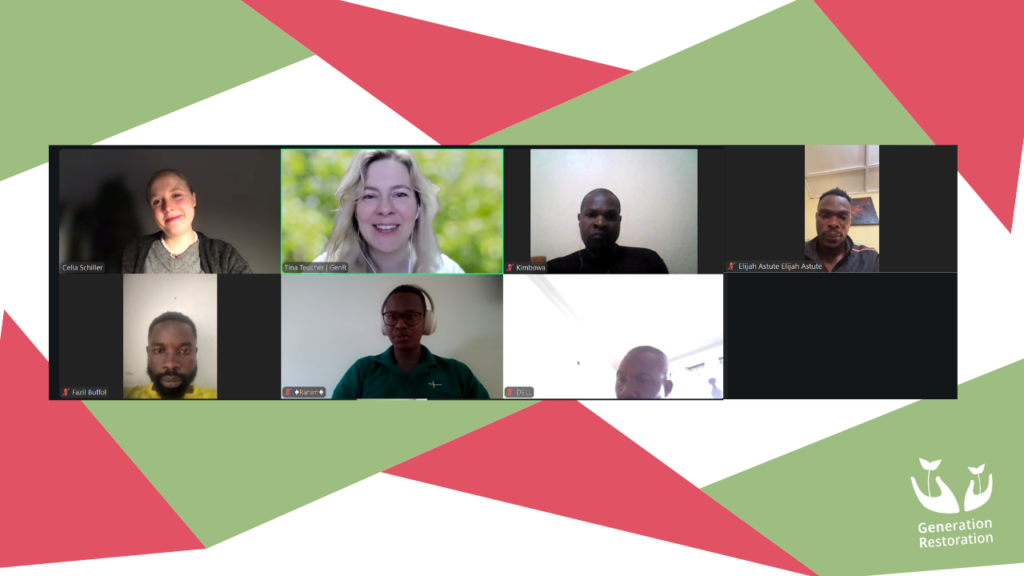
On February 20, 2026, Generation Restoration e.V. hosted an online roundtable bringing together grassroots organizations (GROs) with extensive experience collaborating with international actors in humanitarian contexts.
This session marked the conclusion of our current roundtable series focusing on standardization in regenerative approaches across refugee settlements. It also marked a transition: future sessions will increasingly integrate the perspective of international organizations, broadening the dialogue and deepening systemic reflection.
«What if we could transform refugee camps into regenerative communities?»
From Scaling to Standardization
Throughout previous roundtables, one theme consistently emerged: scaling impact requires structure.
Earlier sessions explored topics such as seed production and conservation, impact assessment, and strategies for scaling regenerative initiatives. In this final session of the GRO-focused series, the emphasis shifted toward standardization.
For us, standardization does not mean rigid replication. It means identifying shared principles and practices that can strengthen regenerative systems across different camps and communities.
The discussion built on two critical steps previously addressed:
Alignment – improving coordination of resources, strategies, and early donor involvement
Institutionalization – strengthening collaboration with institutional donors and embedding regenerative approaches into durable structures
Standardization represents the next step toward building robust social and financial foundations that enable long-term resilience and, ultimately, sustainable business development in fragile contexts.
Guiding Questions
The roundtable was structured around three central questions:
Which practices, protocols, and principles can be consistently applied across different camps and communities to foster regenerative practices?
What prevents the consistent application and sharing of such practices and principles?
From a grassroots perspective, what should international organizations do more — or less — of?
Video recording of the Generation Restoration roundtable on February 20, 2026.
Key Insights
What Can Be Applied Across Contexts
Participants identified several practices that show potential for broader application:
- Awareness campaigns on soil fertility and seed conservation
- Establishing exchange groups within camps
- Continuous virtual exchange formats
- Peer learning circles
- Structured training and knowledge-sharing systems
- Value addition and market identification strategies
A shared understanding emerged: regenerative work benefits from shared learning frameworks while remaining adaptable to local realities.
Barriers to Consistency and Exchange
Participants also openly discussed structural obstacles that limit collaboration and knowledge sharing:
- Travel and food provision costs
- Language barriers
- Cultural differences
- Lack of communal meeting spaces
- Limited incentives for inter-organizational exchange
- Competition for scarce resources
- Unequal access to digital platforms such as Zoom
These barriers underline that regeneration is not only an ecological challenge but also an organizational and systemic one.
Outlook: Integrating the Perspective of International Organizations
With this February roundtable, we conclude the phase in which grassroots organizations were at the center of the discussion.
The next roundtable series will expand the dialogue by intentionally integrating the perspective of international organizations. The aim is to build bridges between local regenerative practice and institutional frameworks – strengthening collaboration and enabling systemic transformation in humanitarian settings.
If you would like to contribute to this exchange, or if you know individuals or organizations who could provide valuable insights, we warmly invite you to share this opportunity or contact us directly at vorstand@gen-r.de.
Join the movement
Coordinating these efforts is the motivation and reasoning behind the establishment of Generation Restoration e.V.
Important Links to follow-up:
- Join WhatsApp Group of the Roundtable
- Join Linkedin Group of Generation Restoration
- Share your projects with us (send them to vorstand@gen-r.de)
- Subscribe for news at www.GenR.world
- Distribute the information among your personal and professional network